
Shipping tastd, a trust-based city-discovery app, solo in six weeks
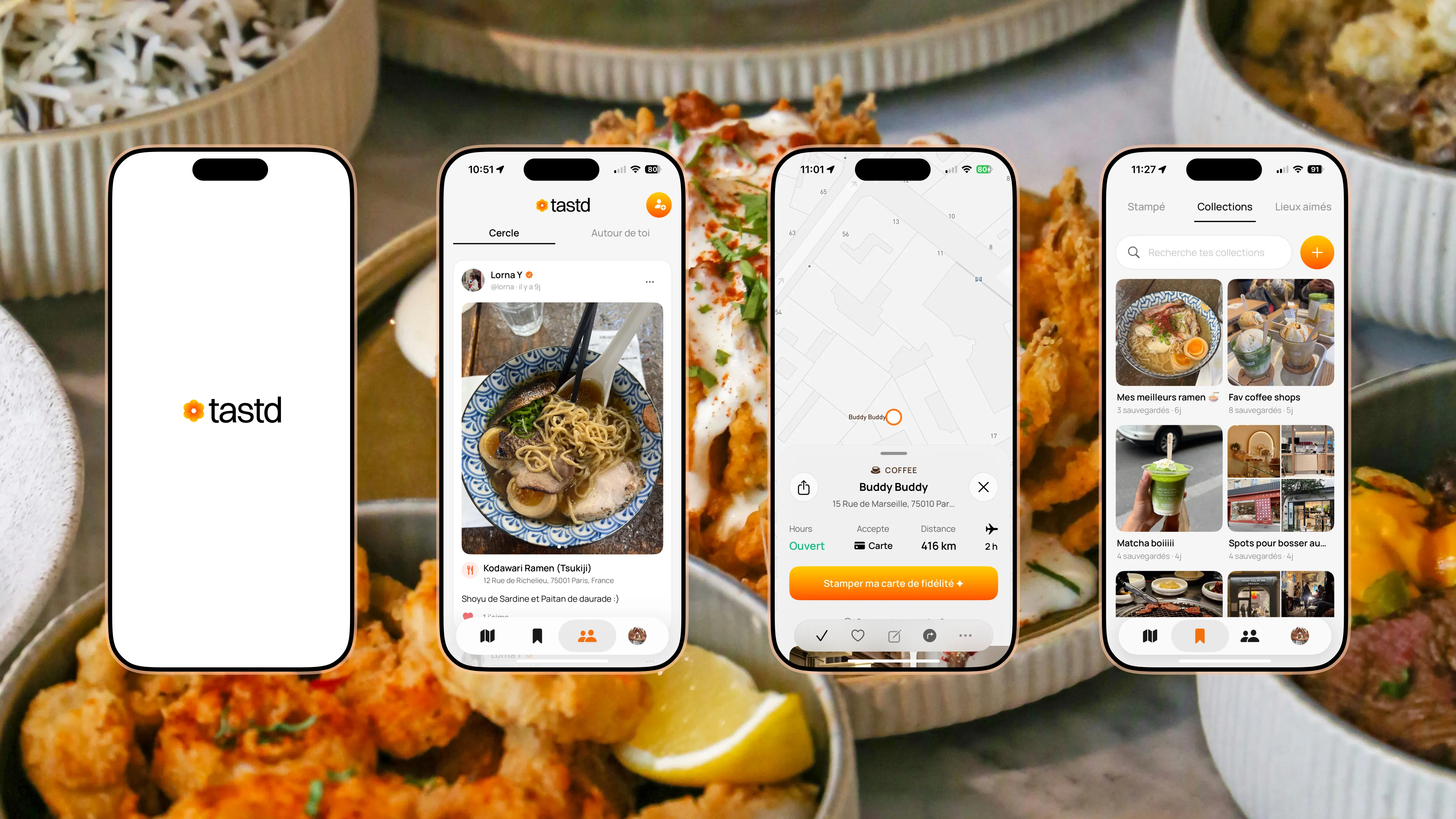
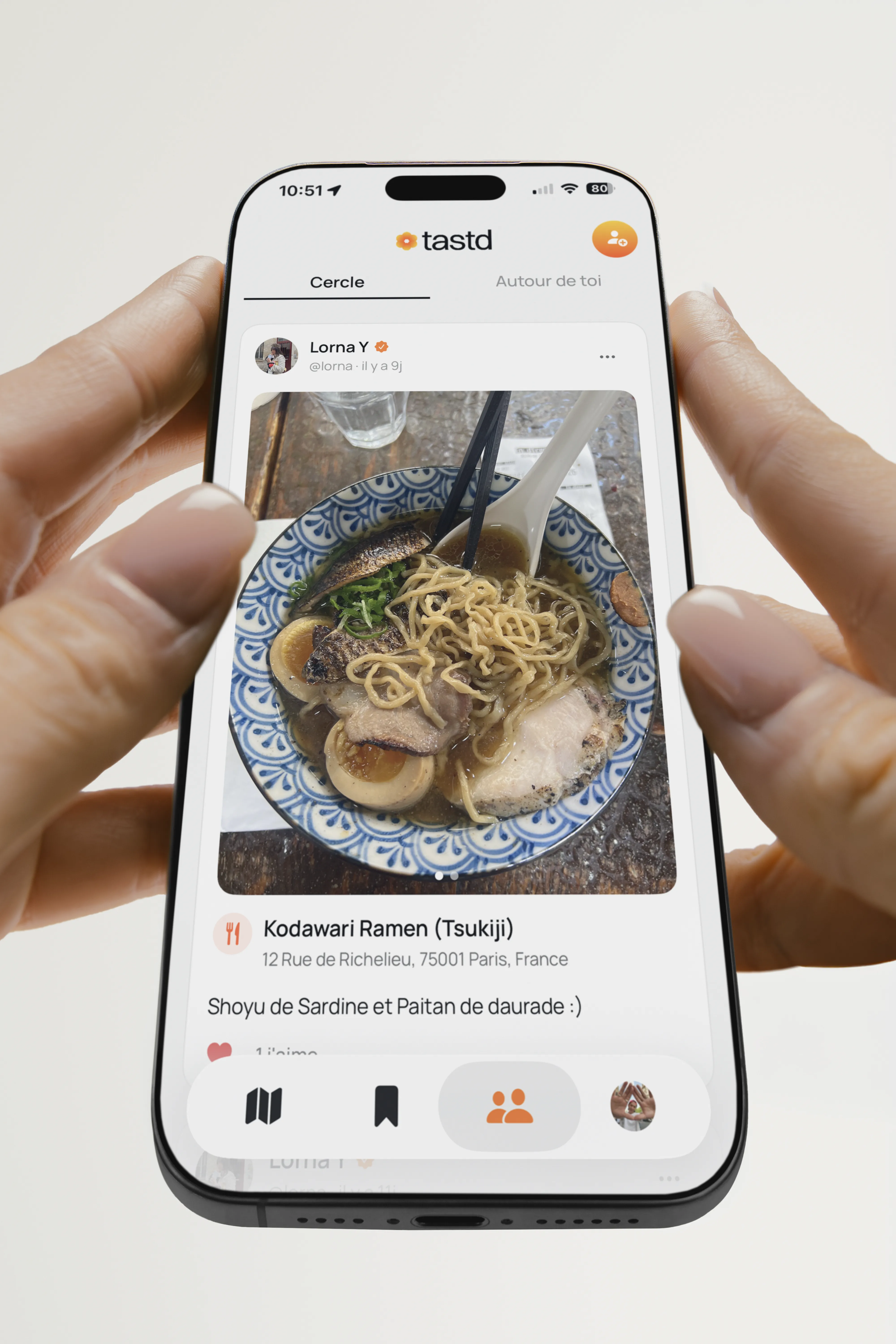
tastd is the iOS app I built solo: research, design, Swift code, backend, App Store submission, in 6 weeks. A curated way to discover cities through the picks of people whose taste you actually share. Below: the why, the how, and the process that made the timeline possible.
Context
Generic discovery platforms (Google, Yelp, TripAdvisor) optimise for volume, not relevance. Users sift through hundreds of 4.2★ results trying to find a spot that fits them, while the three places their tasteful friend would actually recommend rarely surface algorithmically. This isn't a UX issue. It's a data-primitive problem: review systems are built on broad averages, not trust graphs.

Research
Two weeks of discovery before writing a line of Swift. Three streams in parallel:
- Qualitative interviews across 6 cities (light and heavy travellers, 22–38) on how they actually find spots, from first impulse to first save.
- Behavioural teardown of where people store places today: Instagram saves, Notes, screenshots, group chats. The real product I was competing with.
- Competitive teardown of 12 discovery apps, mapping what failed and where the white space was.
Key insights
- A clear majority of memorable spots came from a specific person, not a search result.
- Trust signal overrides star rating. Users will go to a 3.8★ spot if their friend went.
- Discovery splits into two distinct modes: serendipity (browsing) and intent ("good coffee near me, now"). Current apps blur them and serve both badly.
- Existing apps weaponise FOMO and fake urgency. Users want the opposite: confidence.
Strategy
Core product thesis: replace the rating as the discovery primitive. Use trust instead. Three decisions shaped everything that followed:
- Follow the taste, not the place. The unit of discovery is a person's curated list, not a search result.
- No public scoring. Removing stars removes the noise; what remains is qualitative recommendation between people.
- Built-in serendipity. A feed of "what people I follow are loving right now" instead of a static map nobody opens twice.
Process: shipping v1 in 6 weeks
Building solo means there's no handoff cost, and no one to argue against the wrong call. I leaned into both. The week-by-week breakdown:
Discovery and framing
- Interviews, behavioural teardown and competitive analysis (above) synthesised into a one-page product thesis.
- Mapped the trust graph as a data model in parallel with the UX. Schema decisions made *before* the first wireframe so design and backend stayed aligned.
- Hard scope cut: 12 features brainstormed, 4 kept for v1. Each cut justified in writing against the trust thesis.
Design and first build, in parallel
- Figma and Xcode open at the same time. Designed a screen, built it in SwiftUI the same day, used the build to test the interaction, then adjusted the design.
- No high-fidelity polishing before shipping the flow. Interaction first, visual refinement second.
- Supabase schema, auth and APIs wired up in the same sprints as the UI. Backend choices stayed honest because the design team was the eng team.
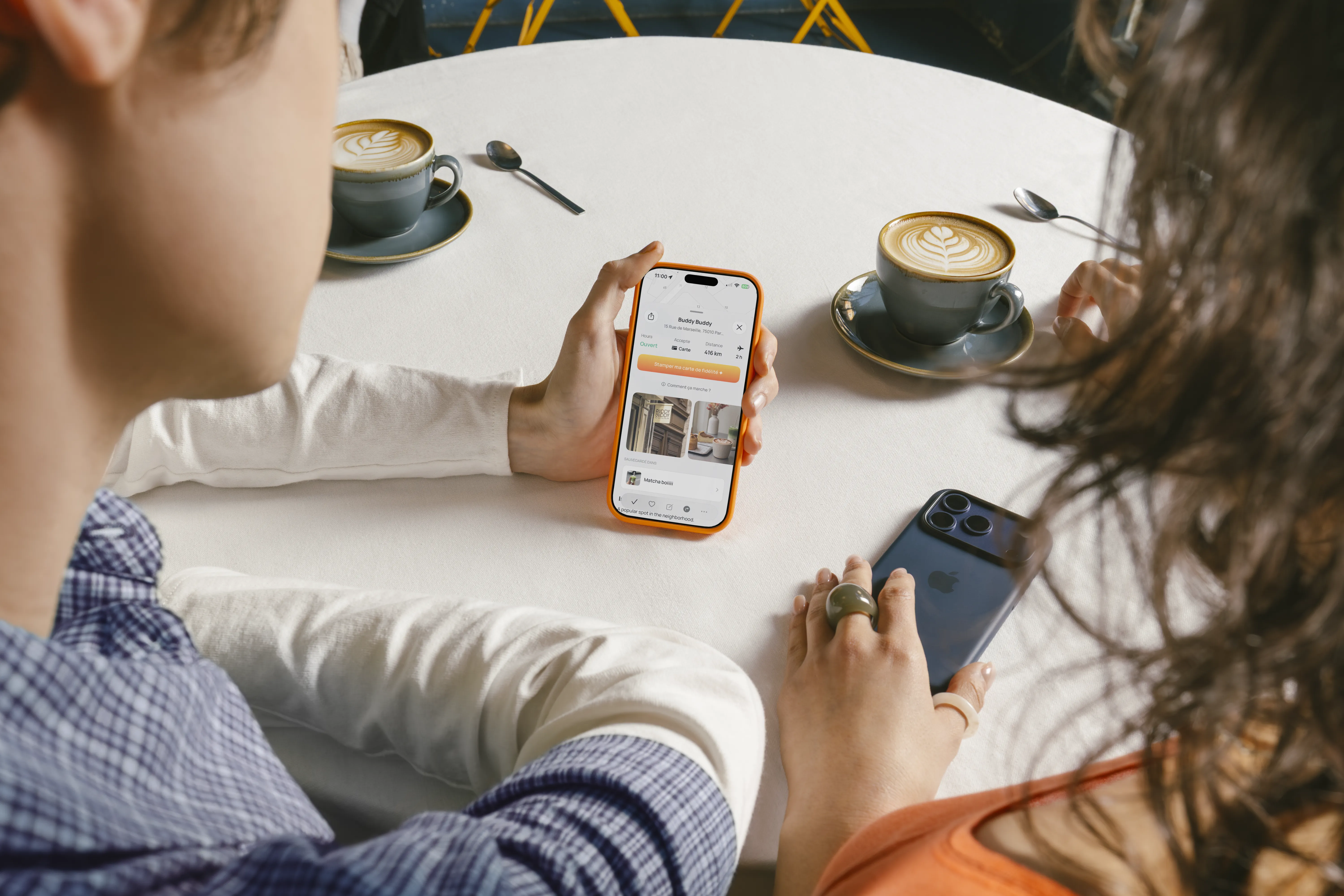
- Mapbox integration prioritised for one specific interaction (the location detail view), not for the whole map experience. Scope discipline at the integration layer too.
Polish, submission, ship
- TestFlight cohort of 8 trusted users, 2 rounds of feedback, 3 friction points re-designed and re-built within 48h each.
- Brand, App Store assets, metadata and onboarding copy written in week 6, never earlier. The product had to be true before it could be sold.
- Submitted to the App Store at the end of week 6. Approved first review.
Stack decisions that made the timeline possible
- SwiftUI over cross-platform. Single-engineer velocity is higher when the tools match the platform, no abstraction tax.
- Supabase as backend: auth, database and storage out of the box. Zero infra time competing with product time.
- Figma kept lightweight. System-of-one components, no over-engineering. Just enough structure to support velocity.
- No premature optimisation. Analytics, A/B framework, advanced caching all postponed to v1.1.
Outcomes
- Shipped v1 to the App Store in 6 weeks: design, code, backend, brand, submission included.
- Trust-based discovery validated as a wedge; product surface intentionally narrow so feedback signal stays sharp.
- Roadmap now driven by behavioural data, not assumptions. What users *do* in the app determines what gets built next.
Reflection
Working solo across research, design, Swift and ops has sharpened how I make product decisions. There's no one to defend the bad ideas. Every build week forces a real trade-off (what's strategically right vs. what ships this Friday) and that tension is the whole job. It's the lens I now bring to every client engagement: shipping isn't a separate phase, it's the design constraint that makes the work honest.